
Online food ordering has become a standard part of how modern restaurants operate. Customers today expect to browse menus, customize their meals, and place orders directly from their smartphones without delays or friction.
As a result, restaurants are adopting mobile apps, online ordering systems, and QR-based menus to manage orders more efficiently and provide a seamless customer experience across multiple channels.
In the early stages of digital adoption, many restaurants relied heavily on third-party delivery marketplaces to reach new customers and start accepting online orders quickly. While these platforms helped increase visibility, they also introduced long-term challenges.
As restaurants grow, high commission fees, limited access to customer data, and reduced control over brand experience can begin to impact profitability and customer relationships. These limitations make it difficult for restaurants to build a sustainable and independent ordering ecosystem.
Because of this shift, many restaurants are now exploring white-label restaurant app solutions that allow them to launch branded mobile ordering apps and accept direct orders from their customers.
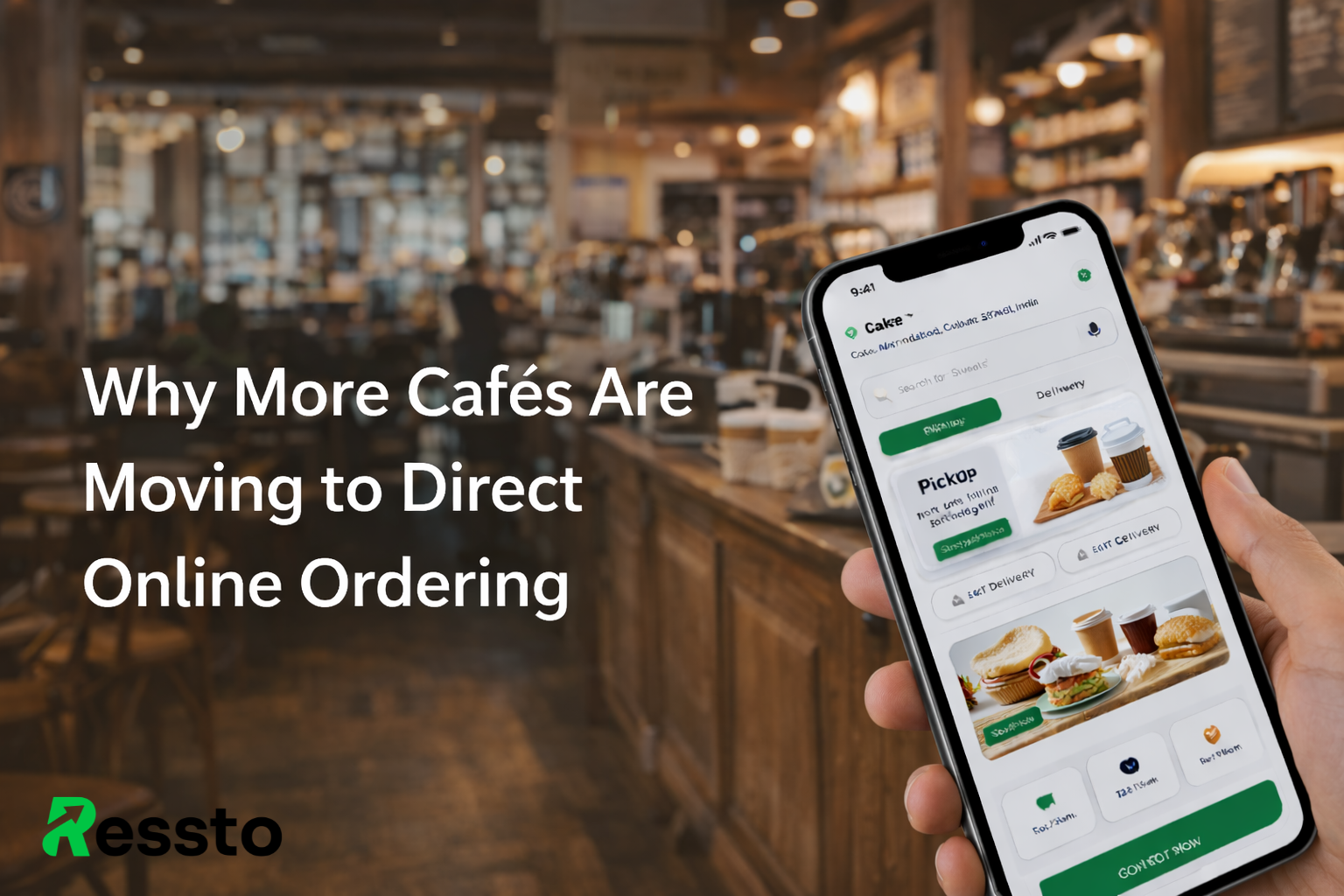
Platforms such as Ressto enable restaurants, cafés, and cloud kitchens to create branded mobile ordering apps connected with website ordering systems and QR-based ordering channels, helping them manage orders more efficiently while maintaining full control over their customer experience.
What Is a White-Label Restaurant App Solution?
A white-label restaurant app solution allows restaurants to launch their own branded mobile ordering application using a ready-built platform instead of developing the software themselves.
The restaurant’s brand, menu, and ordering experience appear inside the mobile app, while the technology infrastructure is managed by the platform provider.
Typical capabilities of a restaurant-owned ordering app include:
Mobile ordering
Menu management
Secure payment processing
Order notifications
Delivery and pickup management
This approach allows restaurants to offer a professional mobile ordering experience without the cost and complexity of building a custom app.
For example, restaurants using a restaurant mobile app builder from Ressto can launch branded ordering apps connected with their website ordering systems and other digital ordering channels.
Why Restaurants Are Shifting to Direct Ordering
Many restaurants initially use delivery marketplaces to attract new customers and generate online orders. While these platforms help with visibility, relying entirely on them can limit long-term growth.
As order volume increases, commission fees and restricted access to customer data begin to impact profitability and decision-making. Restaurants have limited control over how their brand is presented and how customer relationships are built.
To overcome these challenges, many restaurants are shifting toward direct ordering channels such as branded mobile apps, online ordering websites, and QR-based ordering systems. These channels allow customers to place orders directly with the restaurant.
By encouraging repeat customers to order through these direct channels, restaurants can reduce dependency on third-party platforms, improve customer insights, and build stronger long-term relationships.
Challenges of Relying Only on Food Delivery Marketplaces
Third-party delivery platforms have played an important role in expanding online food ordering. However, depending entirely on these platforms can create both operational and financial limitations for restaurants.
Common challenges include:
High commission fees (often 20–30% per order), which can reduce overall profit margins
Limited access to customer data, making it difficult to understand customer behavior
Reduced brand visibility, as marketplace platforms prioritize their own branding
Challenges in building customer loyalty, since repeat interactions remain within the platform ecosystem
According to the National Restaurant Association 2026 State of the Restaurant Industry Report, 60% of restaurant operators say their businesses are now in the technology mainstream, highlighting how digital tools are becoming a standard part of restaurant operations.
Because of this trend, many restaurants are investing in their own digital ordering infrastructure rather than relying entirely on marketplace platforms.
Marketplace Apps vs White-Label Restaurant Apps

The difference between marketplace platforms and white-label solutions becomes clearer when comparing their impact on branding, customer data, and long-term growth.
Key Benefits of a White-Label Restaurant App Solution
Full Ownership of Customer Data
Customer data ownership allows restaurants to access valuable insights about customer behavior and ordering patterns.
When customers place orders through a restaurant’s branded app, the restaurant can collect information such as order history, preferences, repeat purchase behavior, and contact details.
These insights allow restaurants to run targeted promotions, improve marketing strategies, and build stronger customer relationships.
Restaurants using a direct online ordering system for restaurants can also integrate this data with marketing tools and loyalty programs.
Stronger Brand Identity
Brand identity refers to how consistently a restaurant presents its brand across digital ordering channels.
In marketplace apps, the platform’s branding often becomes more visible than the restaurant itself. A branded ordering app allows restaurants to showcase their logo, colors, and menu experience directly to customers.
This helps strengthen brand recognition and encourages customers to order directly from the restaurant in the future.
Reduced Marketplace Commissions
Delivery marketplaces often charge commission on every order placed through their platforms, which can impact restaurant margins over time.
By offering direct ordering options through their own app, website, or QR ordering system, restaurants can gradually shift repeat customers to their own channels.
This approach allows restaurants to retain more revenue per order while maintaining better control over pricing, promotions, and the overall customer experience.
Loyalty Programs That Encourage Repeat Orders
Customer retention plays an important role in long-term restaurant growth.
Loyalty programs reward customers for ordering regularly and encourage them to return. Restaurants can offer reward points, discounts, or exclusive offers to customers who order frequently.
By connecting loyalty programs with digital ordering channels, restaurants can track repeat purchases and increase customer lifetime value.
Platforms like Ressto allow restaurants to integrate loyalty tools with their ordering systems.
Building a Complete Restaurant Digital Ordering Ecosystem
Restaurants that launch their own branded ordering apps often build a digital ordering ecosystem that connects multiple ordering channels into one system.
Online Ordering Websites
Online ordering websites allow customers to browse menus and place orders directly from the restaurant’s website.
Example: A customer visiting the restaurant’s website during lunch hours can quickly place a pickup order online.
QR Code Ordering Menus
QR ordering enables customers to scan a QR code and instantly access the restaurant’s digital menu.
Example: A customer sitting at a table scans the QR code and places an order directly from their phone.
Branded Mobile Ordering Apps
A branded restaurant app provides a dedicated platform where customers can browse menus, customize meals, and place orders.
Example: A returning customer opens the restaurant’s mobile app to reorder their favorite dish.
Customer Loyalty Programs
Loyalty tools reward frequent customers and encourage repeat purchases.
Example: After several orders, a customer earns reward points that can be redeemed for a discount on their next order.
Integrated Order Management
Orders from websites, apps, and QR menus can be managed through a centralized dashboard.
Example: Restaurant staff can see orders from different channels in one dashboard and send them directly to the kitchen.
Platforms like Ressto allow restaurants to manage these channels through a unified dashboard.
How to Choose the Right White-Label Restaurant App Provider
When selecting a white-label ordering platform, restaurants should evaluate several factors.
Important considerations include:
1.Ability to launch branded mobile apps
2. Ownership of customer data
3. Integration with POS or order management systems
4. Support for website and QR ordering
5. App store publishing support
6. Platform reliability and support
Choosing the right provider helps restaurants build a scalable digital ordering system that supports long-term growth.
Conclusion
The restaurant industry continues to evolve as digital ordering becomes a core part of the customer experience. While delivery marketplaces remain useful for customer discovery, many restaurants are now focusing on building their own direct ordering channels for long-term growth.
Owning digital ordering platforms allows restaurants to strengthen customer relationships, gain better control over their brand experience, and improve overall profitability. Instead of relying entirely on third-party platforms, restaurants can create a more sustainable and scalable ordering ecosystem.
A white-label restaurant app solution enables restaurants to launch branded mobile apps, integrate website ordering, and offer QR-based ordering through a unified system. This approach helps streamline operations while maintaining full control over customer interactions and data.
By investing in direct ordering technology, restaurants can reduce dependency on external platforms and build a stronger foundation for future growth.
With solutions like Ressto, restaurants can bring together mobile apps, online ordering, QR menus, and centralized order management into one platform.
Give your restaurant complete control over online orders and customer relationships.
Build your white-label restaurant mobile app and start your free trial with Ressto to begin accepting direct online orders from your customers.
FAQ
What is a white label restaurant app solution?
A white label restaurant app solution allows restaurants to launch their own branded mobile ordering application using a ready-built technology platform.
Why do restaurants use white label mobile apps?
Restaurants use white label apps to reduce marketplace commissions, own their customer data, and create direct ordering channels.
Can customers place delivery and pickup orders through restaurant apps?
Yes. Most restaurant mobile ordering apps support delivery orders, pickup scheduling, and real-time order tracking.
Do white label restaurant apps integrate with restaurant systems?
Many white label restaurant apps integrate with POS systems, online ordering platforms, and kitchen management tools.


Write a comment ...